Your team just passed 50 people. The current office feels tight, the lease is ending, and nobody wants a six-month fit-out project. Sound familiar?
This is where managed office space for large teams comes in. You get a finished, fully run workspace you can move into in weeks, not quarters. But providers differ a lot, and a poor pick gets expensive fast. In this guide, we cover what to check, what to negotiate, and what you’ll really pay.
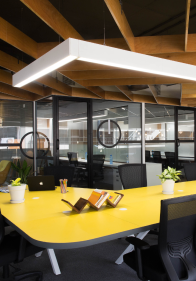
A managed office is a private workspace that a provider sets up and runs for you. Desks, furniture, internet, power backup, housekeeping, security, and meeting rooms all sit under one monthly fee. Your team gets its own space, often a full floor, and the provider handles the daily work.
That’s why fully managed office space for companies appeals to HR and operations heads. You don’t hire facility staff or chase five different vendors.
| Coworking | Managed office | Traditional lease | |
| Setup effort | None | Minimal | Heavy (fit-out, IT, furniture) |
| Privacy and control | Shared | Private and brandable | Full |
| Lock-in | Short | Flexible to medium | Long |
| Upfront cost | Low | Low | High |
| Best for | Small teams | Teams of 50+ | Companies that want full ownership |
The traditional route carries real risk. Traditional leases often involve multi-year lock-ins, commonly several years, while managed offices typically offer shorter, more flexible terms. Security deposits for conventional offices can also run several months’ rent, often around three to six months depending on the landlord and deal. A managed office removes most of that weight.
The market shows where companies are heading. Flexible workspace operators accounted for nearly 20% of India’s total office leasing in the first half of 2026. Bengaluru remained India’s largest flex market, taking 30% of all flex seats leased across the top eight cities. Global capability centres also took 44% of flex seats nationwide. Big companies no longer treat managed offices as a stopgap.
Here’s why teams make the switch:
Not every provider can handle 50, 100, or 200 seats well. These are the checks that matter most.
Count your headcount today. Then add room for the next 12 to 18 months, since 20 to 30% extra is a sensible starting point. Ask whether the provider can add seats on the same floor or in the same building. If growth means moving again, you lose the main benefit of going managed.
Ask what you can change. Branding, cabin-to-desk ratio, breakout zones, and open or closed layouts all matter for large teams. Also ask who pays for the changes and what happens to them when you leave.
A managed office space with IT infrastructure should cover more than “fast Wi-Fi.” Look for internet lines from two separate providers, backup power, a network or server room, a firewall, and on-site IT support during your working hours. A 100-person team can’t afford a slow morning.
Ask how many meeting rooms your team gets for its own use and how many are shared. Check the video conferencing setup in person. Also ask whether room hours are included or billed extra.
Get the exact number of car and two-wheeler slots for your seat count, in writing. Then check access cards, visitor management, CCTV, round-the-clock guards, and fire safety. These details matter more when hundreds of people walk through every day.
Map where your people live. A cheaper area that adds 40 minutes to every commute costs you in hiring and retention. Check metro access and nearby food options too.
A managed office space with flexible lease terms only helps if the flexibility is written into the contract. Lock-ins vary by provider, so get everything on paper. For a deeper walkthrough, see our managed office checklist.
Ask for the lock-in length, the notice period, and the penalty for leaving early. Compare these across providers, not just the rent.
Can you add seats mid-term? Can you drop seats if the team shrinks? Get the price of extra seats agreed upfront, not after you’ve moved in.
Ask what happens to your custom interiors when the lease ends. Also check the annual rent increase and how your security deposit is returned.
Providers quote a price per seat per month. For managed office costs per seat in Bangalore, indicative listing ranges for 80 to 100 seat setups are approximately ₹8,000 to ₹11,000 in Whitefield, ₹9,000 to ₹12,000 in Hebbal, ₹10,000 to ₹14,000 on the Outer Ring Road, and ₹13,000 to ₹18,000 in Koramangala. Final pricing varies by building, fit-out, lease tenure, seat count, and inclusions. Treat these as a starting point, since rates change by building and deal size.
Four things move the price most: location, seat count, what’s included, and lease length. Larger teams and longer commitments usually bring the per-seat rate down.
Hidden costs can materially increase the headline per-seat figure; as a planning estimate, allow for roughly 15 to 25% depending on the provider and inclusions. Ask about parking charges, meeting room hours, power backup, maintenance fees, and whether the quoted rate includes GST. A clear, itemized quote is a good sign. A vague one isn’t.
Get a Custom Quote for 50+ Seats
At Goodworks, we build managed offices for teams that have outgrown shared space but don’t want the weight of a long lease. Here’s what that looks like:
If you’re comparing options for managed office space for large teams, we’re happy to walk you through a site and give you an itemized quote.
Three decisions shape your choice: how much space and growth room you need, whether the infrastructure can support your team daily, and whether the lease terms leave you room to change. Get those right, and the price comparison becomes much easier.