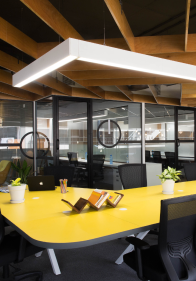
Many hybrid teams pay for office space they don’t fully use. In some workplaces, desks sit empty on certain days and meeting rooms get booked but stay dark. Attendance differs by company, industry, location, and policy, so your own numbers matter most. Still, the moment someone says “let’s cut office costs,” everyone asks: will this slow us down?
It doesn’t have to. We protect what keeps a team fast, like steady internet, quiet places to focus, and easy-to-book rooms. Then we trim what doesn’t help anyone do their job. Here’s how, step by step.
Rent often comes with a lock-in period, a notice period, and yearly escalation, so check your agreement before planning a cut. The security deposit is usually refundable, so think of it as working capital tied up for the lease term, not a running expense. Deductions depend on your lease terms. Fit-out and furniture add a large upfront cost, and who pays for them and for restoration at exit depends on the agreement.
Power, internet, housekeeping, pantry, and maintenance recur regularly. CAM charges (common area maintenance) may be billed monthly or quarterly, estimated and reconciled later, or included in rent. GST may apply to several of these supplies, and its effective cost depends on the transaction, your business status, and eligibility for input tax credit. Consult a tax professional if you are unsure how GST applies to your office costs.
Total occupancy cost goes beyond rent. It also includes deposits, fit-out, furniture, CAM, utilities, taxes, insurance where applicable, restoration, exit costs, and meeting-room charges, so compare options over the full term. Costs that can change are a practical starting point only. Some may be essential, and larger lease savings take planning, like renewal talks or space reduction.
Before any cut, ask: will this make someone’s day slower? If yes, leave it alone. Then ask the team. They know where the waste is.
Walk the floor at different times on different days, and compare the people using the office with the desks you pay for. The gap is often bigger than we expect.
With hybrid work, teams often come in on different days, so desks stay but people don’t. Average attendance shows how much space sits idle. Peak attendance shows how much you need on your busiest days.
Two to four weeks is a useful starting period, not a universal standard. Compare representative weeks, not just holidays, festivals, quarter-end weeks, or onboarding periods. Count everyone using the office, not only people at assigned desks, including meeting rooms, collaboration areas, quiet zones, phone booths, visitors, and temporary workers. Busiest and quietest days are clues, not exact answers, so leave a buffer for growth, visitors, and peak attendance.
Switch to LED lights, set the AC to a steady temperature, and turn off equipment at night. Saves: a steady cut on power and supplies bills. Risk: usually low.
Cancel tools nobody opened last month, and check whether team plans cost less. Saves: money leaving every month for nothing. Risk: usually low.
One example policy is releasing a room if nobody checks in within 15 minutes. Adapt it, allow exceptions for clients, visitors, accessibility needs, or security procedures, and announce it first. Saves: you may need fewer rooms. Risk: usually low, once people understand the policy.
Assign desks by day or team when hybrid work splits attendance. Savings are meaningful only if you can reduce leased space or costs, since existing desks may already be paid for. Consider employee experience, collaboration, privacy, and team adjacency. Saves: space and furniture costs, if reducible. Risk: medium. Explain why before you change anything.
If a section stays empty week after week, you may be able to sublet or hand it back, but subletting, surrender, or reduction may need landlord approval. Check lease restrictions, exit costs, restoration duties, and notice periods first. Saves: rent on unused space, if your lease allows. Risk: medium. Leave room for growth.
Bring your own numbers. If a lot of space sits empty, you have a stronger case for less area or a lower rate. Saves: lower rent or a smaller lease, if the landlord agrees. Risk: medium. Know your next step if the landlord says no.
A flexible workspace can let you pay for the seats you need and adjust as the team changes. Check for minimum terms, deposits, notice periods, usage limits, escalation clauses, or exit fees. Saves: potentially a lot if your team size shifts or your space is badly sized. Risk: higher, because it’s a bigger decision.
Terms and setup times vary by provider, location, plan, and negotiation, so treat this as typical patterns, not fixed rules.
| Option | Upfront cost | Commitment |
| Traditional lease | Often high | Often long, with lock-in |
| Managed office | Often low to medium | Often shorter than a lease |
| Coworking | Often low | Often flexible |
| Virtual office | Often very low | Often flexible |
A virtual office may provide a business address, mail handling, and meeting-room access, depending on the plan, but not normally a daily workplace. Company registration and GST registration are separate matters. Acceptance of an address depends on applicable rules and documents, such as agreements, NOC where required, and address proof. Authorities may verify the premises or ask for documents, so the provider should support any verification. Before you rely on an address, check the requirements with a company-law or tax professional.
Use these as starting points only. The right choice depends on headcount, peak attendance, privacy, security, client visits, growth plans, and budget.
If the numbers point to a change, we can help with all three options. Each one is built for a different kind of team.
A managed office gives your team a private space that’s ready to use. Furniture, internet, power backup, housekeeping, and maintenance are all handled for you. You skip the fit-out and the long setup, and you pay one predictable monthly amount instead of tracking a dozen small bills.
It suits teams that want their own space and a clear view of their office cost. You can see our managed office options here.
Coworking works when your team size changes. You take the seats you need today and add more as you grow. Meeting rooms and common areas are part of the space, so you don’t pay for rooms you rarely use.
If your team works remotely or you’re just starting out, you may only need a business address. A virtual office gives you that, without paying for desks nobody sits at. Take a look at our virtual office spaces.
Not sure which fits? Compare the options against your own numbers from the earlier sections, or book a visit and we’ll walk you through the spaces.
Cutting office costs doesn’t mean making the team’s day harder. Start with the numbers, protect what keeps people productive, and cut based on risk. Better matching space to attendance can create significant savings for some hybrid teams, subject to lease terms, peak demand, and exit costs. In four weeks, you can list your costs, track desk and room use, cancel unused tools, and compare options.